Driven wheel question
Some delta trikes drive one rear wheel only, others use a differential to drive both. Single-wheel drive can feel uneven on loose surfaces and under hard acceleration.
choosing, buying and maintaining three-wheeled adult cycles, both pedal-only and electric-assist
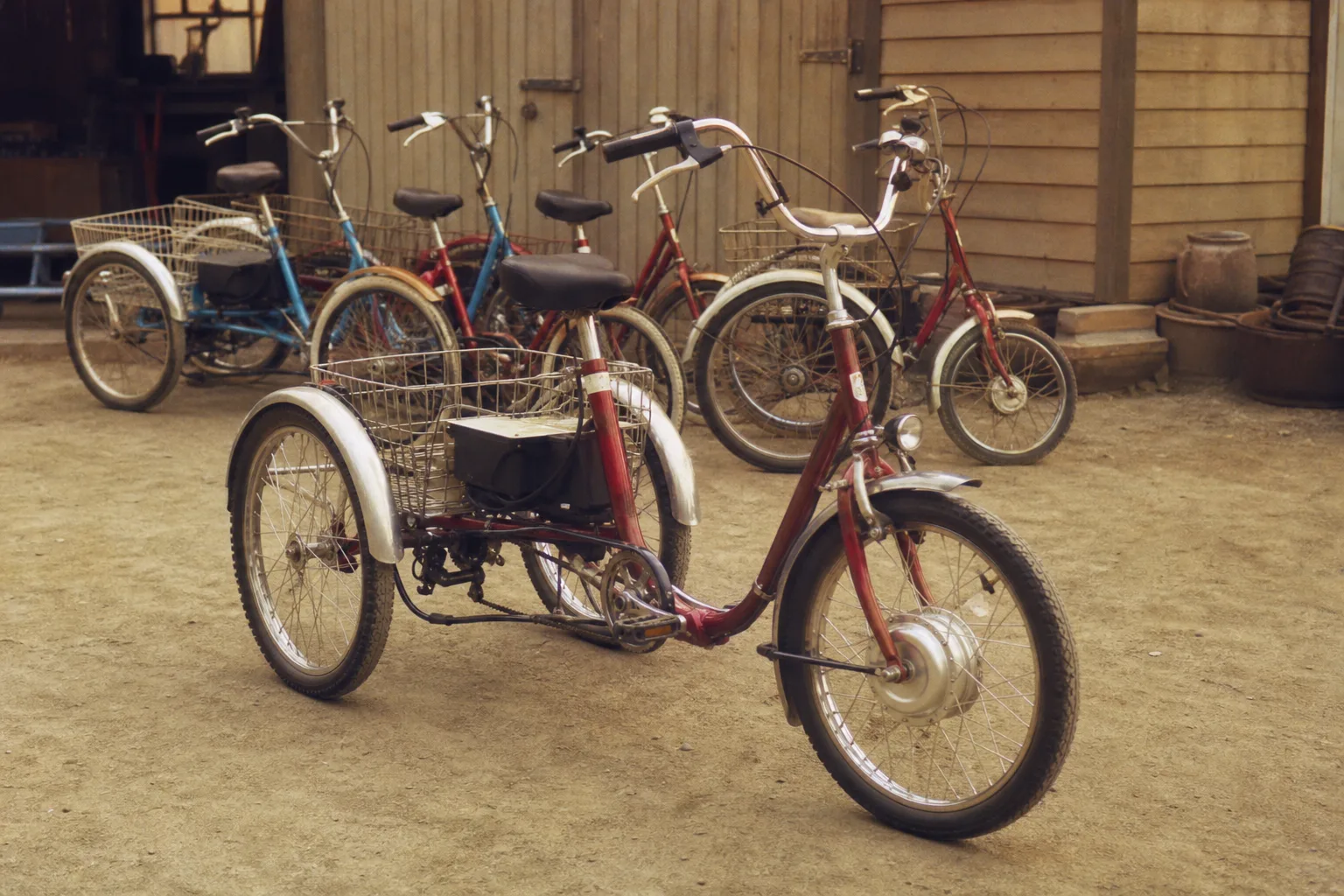
A three-wheeled frame commonly starts heavier than a comparable bicycle, and cargo baskets encourage loads that add more. Every motor decision should be made assuming the trike will be carrying something.
A three-wheeled frame weighs more than a bicycle before anyone sits on it, and most riders who buy one are also carrying groceries, a dog, or a week of yard debris in the rear basket. That combination changes what a motor has to do. A system that feels lively on a flat parking lot demonstration can stall halfway up the ramp out of a river access road, and the difference is rarely visible in the specification sheet a dealer prints out. The parts that decide it are the drive type, the torque figure, the cells inside the pack, and how easily any of it can be replaced.
A rear hub motor on a delta trike usually drives one wheel, or occasionally both through a differential, and it applies its power at whatever speed the wheel happens to be turning. That works well on rolling ground and it keeps the drivetrain simple, since the motor never touches the chain or the freewheel. On a sustained climb with a load, though, the hub has no gears to hide behind, and as road speed drops the motor falls out of its efficient range, draws more current, and gets hot. A mid-drive turns the cranks instead, so downshifting multiplies its torque exactly the way it multiplies yours, and it will crawl up a grade that leaves a hub motor whining.
The trade is wear and complexity. Mid-drives push their output through the chain, the chainring, and a freewheel that was sized for human legs, so those parts wear faster and need attention more often, and on a delta trike the chain run is long and often awkward. Hub motors are quieter about their existence and cheaper to buy. A careful reader checks which wheel is actually driven, whether the motor is geared or direct drive, and what the manufacturer says about continuous rather than peak output, because peak numbers are measured for seconds.
Wattage describes how much electrical power the system will draw; newton-meters describe how hard the motor pulls at the wheel or the crank. On a loaded trike the second number is the one that matters, and the two are not interchangeable, since a 500-watt geared hub with strong reduction can outpull a 750-watt direct drive on a steep pitch. Ask for the continuous torque rating and the reduction ratio if the seller has them. Then ask what happens when the motor overheats, because well-designed controllers reduce output gradually while cheap ones simply cut, which on a camber, mid-climb, is a genuinely unpleasant surprise.
Watt-hours are volts multiplied by amp-hours, and they say how much energy the pack holds on the day it was built. They say nothing about the cells. Packs built on named cylindrical cells from established manufacturers hold capacity over hundreds of cycles, tolerate the current a heavy trike demands, and come with a battery management system that balances them properly. Anonymous cells in the same plastic case will show the same number on the label and lose noticeable range within two seasons. Look for a UL 2849 listing for the whole electrical system, and note that the Consumer Product Safety Commission is the federal body responsible for consumer product safety in this category.
A battery is a consumable with a life measured in charge cycles, and it will need replacing while you still want the trike. The shape of that expense is worth understanding before you buy: a pack from a mainstream system supplier typically runs into several hundred dollars, sometimes approaching a four-figure sum on larger capacities, which is a meaningful fraction of what an inexpensive trike cost new. Controllers and displays are cheaper but often model-specific, and a proprietary connector or a locked firmware pairing can mean the only source is the original importer. Standard mounts, common connectors, and a motor from a company with a dealer network all make year five cheaper than a closeout price does.
Before money changes hands, ask the seller to quote a replacement battery, controller, and display for that exact model, in writing, and ask how long they expect to stock them. A dealer who answers plainly is telling you something useful about the next five years, and the answer usually costs less than the discount that tempted you.
Some delta trikes drive one rear wheel only, others use a differential to drive both. Single-wheel drive can feel uneven on loose surfaces and under hard acceleration.
Geared hub motors use internal reduction and pull harder at low speed, while direct-drive hubs are quieter and simpler but weaker on steep grades. The specification sheet does not always say which you are getting.
Peak output figures are measured over seconds and say little about a long climb. The continuous rating is the number that describes what the motor can sustain without heat protection intervening.