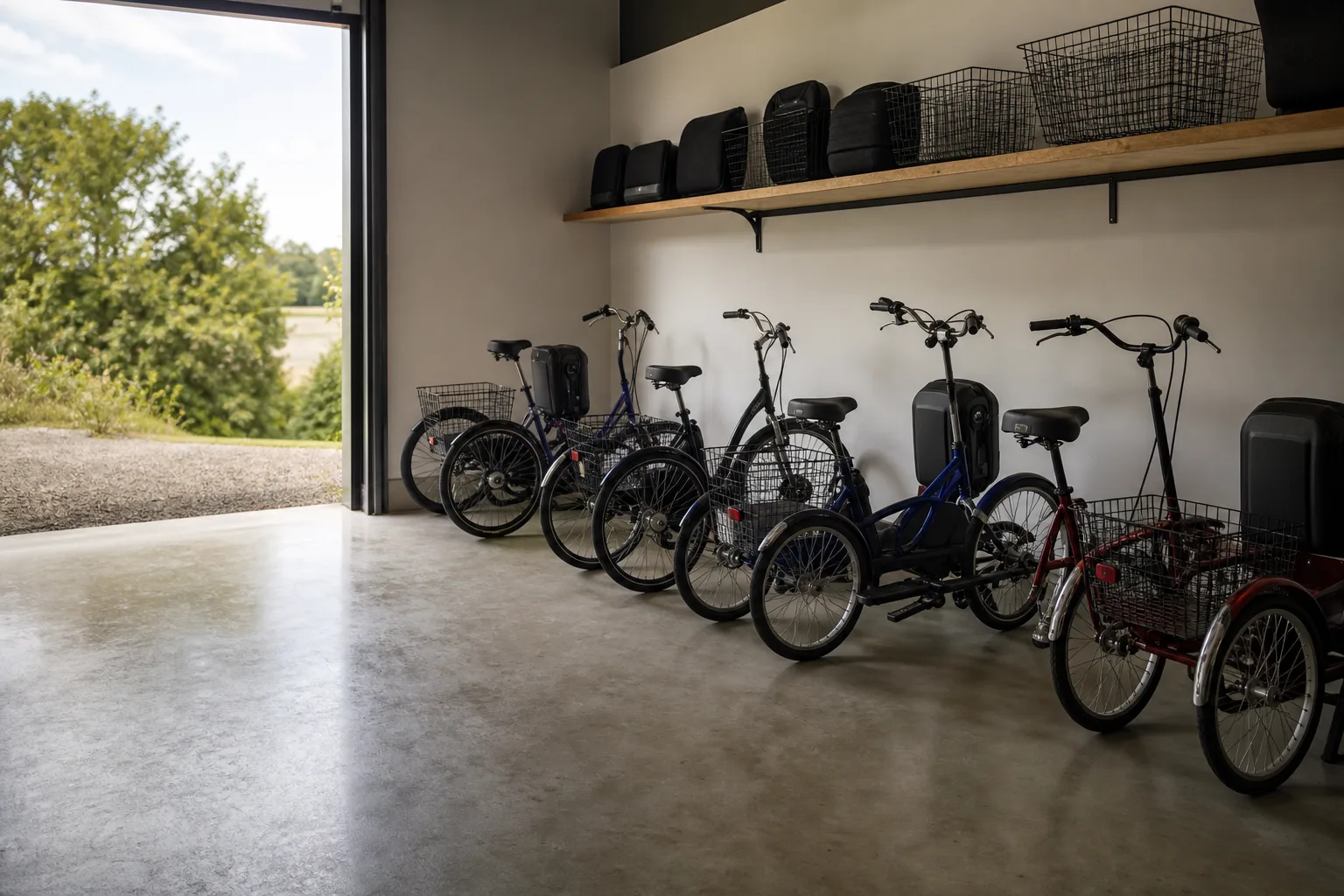
The third wheel solves one problem completely and creates three partial ones, and most listings only mention the first. A trike stands up on its own. That single fact is why people buy them, why the rider who has stopped trusting a foot-down stop at a red light finds one worth several thousand dollars, and why nothing about a two-wheeler with wider tires or a lower step-through frame is a substitute. What follows is the rest of the ledger: the width you have to plan around, the way a crowned road pulls at the bars, and the cornering habit you will have to unlearn.
The problems a third wheel genuinely solves
Balance at a standstill is the big one. Staying upright on two wheels below about four miles an hour is an active skill, and it is the skill that fails first with inner-ear trouble, peripheral neuropathy, a knee that no longer takes a sudden sideways load, or simple caution after a fall. On a trike the bike holds itself while you clip a helmet, check a phone, or wait behind a truck at a four-way stop. Riders with arthritic hips often find the same relief in a different form, because nothing about mounting or dismounting requires swinging a leg over a moving object.
Loading is the second. A rear basket on a delta trike sits between two wheels on a stable platform, and forty pounds of groceries in it behaves nothing like forty pounds hung off a two-wheeled rack, which changes the steering the moment you go slow. People who have given up driving for short trips buy trikes for this reason more than any other. The cargo does not make the machine twitchy, and the machine does not fall over while you pack it in a parking lot.
Add a motor and the range of who is served widens again. Hills that end a ride become manageable, headwinds stop being a reason to stay home, and the extra weight of the trike itself, which is real, stops mattering on the way up. The Consumer Product Safety Commission oversees federal safety requirements for bicycles, including the low-speed electric class that most adult trikes fall into, so the machines sold through established retailers are working inside a defined framework rather than an unregulated one.
Width is the constraint you will meet first
A typical adult trike measures somewhere between thirty and thirty-four inches across the rear axle, and that number decides more about your daily life than the motor spec does. It decides whether the machine fits through your gate, past the water heater in the garage, down the side yard, and through the door of the shed you were planning to keep it in. It decides whether you can pass a pedestrian on a five-foot sidewalk without leaving the pavement. Measure the tightest gap on your own property with a tape before you order anything, because a trike that lives outdoors under a tarp deteriorates fast.
Bollards and gates on rail trails are the other place width bites. Many were installed to stop motorcycles, and a good number of them will not pass a thirty-two-inch axle. Local parks departments have generally been receptive to complaints about this, and some trails have been rebuilt with staggered gates that a trike can thread. Still, the honest approach is to ride the specific trail you care about, or ask someone who has, before you assume access.
Camber pull, and why a crowned road feels like a slow leak
Roads are built with a crown so water runs off, which means the shoulder you ride on tilts away from the centerline, usually by two percent or so. A two-wheeler absorbs that by leaning a degree or two and you never notice. A trike cannot lean, so the whole frame sits on the tilt and gravity works on the low side continuously, and you steer against it the entire ride. Over an hour that becomes real fatigue in the arms and shoulders. Wider track, lower center of gravity and correct tire pressure all reduce it, and riders who have written up their first year with a 3 wheel e bike tend to put camber near the top of the list of things nobody warned them about.
The fix is mostly technique and route choice. Ride the flattest available line, favor paved trails and parking lots over crowned rural roads, and check that both rear tires carry the pressure printed on the sidewall, because a soft tire on the low side compounds the tilt. Some frames allow small adjustments to headset angle or handlebar position that make holding a line less tiring. None of this eliminates camber, but it moves it from a problem to a habit.
You cannot lean into a turn, and speed is the price
On two wheels you lean into a corner and centrifugal force is balanced by gravity. On three wheels you stay upright, the force pushes outward with nothing opposing it, and past a certain speed the inside wheel lifts. That speed is lower than experienced cyclists expect, particularly on a delta trike with a loaded rear basket sitting high. Everyone who rides a trike learns this once, usually at low consequence, and then rides differently. Brake before the corner, keep both hands on the bars, and shift your weight toward the inside of the turn rather than away from it.
The cost, plainly stated, is speed in corners and space on paths, paid in exchange for never having to balance. For a rider who has stopped riding altogether, that trade is not close.
Take the tape measure to your gate and your shed before you take your card to the checkout, then find a trike to sit on and steer across a sloped parking lot for ten minutes. The machine that survives both tests is the one worth buying.